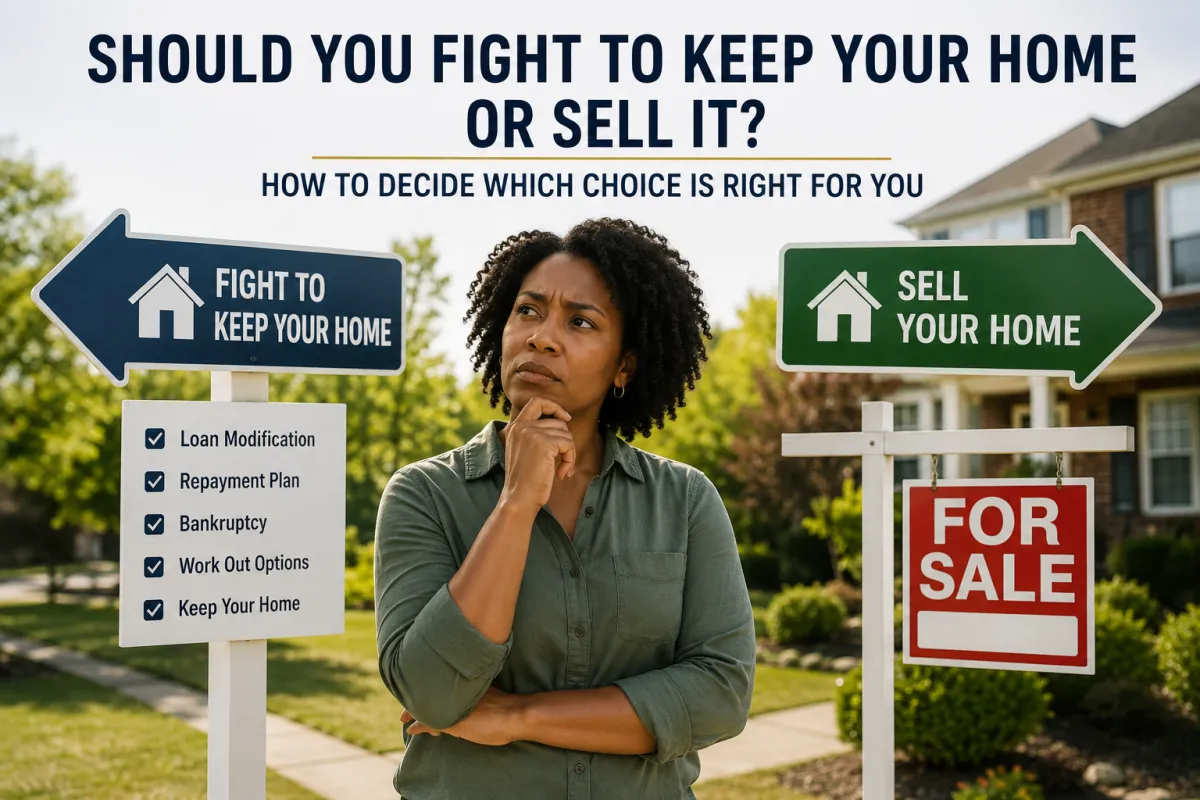
Should You Fight to Keep Your Home or Sell It? How to Decide Which Choice Is Right for You
Falling behind on your mortgage can leave you feeling overwhelmed.
If you're asking yourself whether you should fight to keep your home or sell it before foreclosure, you're not alone. Many Maryland homeowners face this difficult decision every year, often after an unexpected life event such as job loss, illness, divorce, or rising living expenses.
The good news is that foreclosure isn't your only option. Depending on your financial situation, the amount of equity you've built, and your long-term goals, you may have more choices than you realize.
This guide will walk you through the most important questions to consider so you can make an informed decision that's right for you and your family.
There Isn't One Right Answer for Every Homeowner
Every homeowner's situation is different.
Some people experience a temporary financial setback. Others face long-term changes that make keeping the home much more difficult.
Before making any decisions, take time to look at the complete picture.
Ask yourself:
What caused me to fall behind?
Has my financial situation improved?
What do I want life to look like one or two years from now?
Being honest about your circumstances can help you choose the path that best supports your future.
Start by Understanding Why You're Behind on Your Mortgage
The reason you're behind often plays a big role in deciding what comes next.
Some hardships are temporary.
Others may have a lasting impact on your finances.
Common reasons homeowners fall behind include:
Losing a job
Reduced work hours
Medical bills
Divorce
The death of a loved one
Retirement
Unexpected home repairs
Rising household expenses
For example, someone who recently returned to work after a temporary layoff may be in a much better position to keep their home than someone whose income has permanently decreased after retirement.
If your income is expected to recover soon, keeping the home may be a realistic goal.
If your financial situation has changed permanently, selling may provide an opportunity to regain financial stability and reduce ongoing stress.
Neither choice is a failure.
Both are simply different ways of moving forward.
Can You Afford the Home Going Forward
Many homeowners focus on catching up on missed mortgage payments.
That is important.
But it's just as important to ask whether you can comfortably afford the home after catching up.
Think about all of the monthly costs, including:
Mortgage payment
Property taxes
Homeowners insurance
HOA fees
Utilities
Regular maintenance
Unexpected repairs
Owning a home involves much more than making the mortgage payment.
If your monthly budget will continue to feel stretched, it may be worth asking whether another housing option would provide greater long-term financial security.
How Much Equity Do You Have
Your home's equity may play a major role in your decision.
Equity is the difference between what your home is worth and what you still owe on your mortgage.
For example, if your home is worth $500,000 and you owe $350,000, you may have approximately $150,000 in equity before selling costs.
That equity could potentially help you:
Pay off your mortgage
Cover selling expenses
Pay down other debts
Save for your next home
Build an emergency fund
Understanding your equity helps you see the full picture before deciding whether keeping or selling your home makes the most financial sense.
What Would It Take to Keep the Home
If keeping your home is your goal, it's helpful to understand what options may be available.
According to the Consumer Financial Protection Bureau, homeowners who contact their mortgage servicer early often have more options than those who wait until foreclosure progresses.
Depending on your circumstances, you may qualify for:
A loan modification
A repayment plan
Mortgage forbearance
Refinancing, if eligible
State or nonprofit homeowner assistance programs
Each option has different requirements.
Learning about these possibilities early may give you more time to decide which path makes the most sense.
When Should You Make a Decision
One of the biggest mistakes homeowners make is waiting too long to explore their options.
Whether your goal is to keep your home or sell before foreclosure, acting early usually gives you more flexibility.
As foreclosure progresses, the number of available solutions may become more limited.
Taking action sooner doesn't mean you've made a final decision—it simply means you're giving yourself the best chance to evaluate all of your options.
What Are the Benefits of Selling Before Foreclosure
For some Maryland homeowners, selling before foreclosure offers several advantages.
It may allow you to:
Stay in control of the sale process
Protect any equity you've built
Avoid additional legal costs
Reduce financial uncertainty
Plan your next move on your own timeline
Selling isn't giving up.
Sometimes it's a thoughtful financial decision that helps protect your long-term goals.
Many homeowners find peace of mind knowing they made a proactive choice instead of waiting until fewer options remained.
Comparing Your Two Main Options
Both keeping your home and selling before foreclosure have potential benefits. The right choice depends on your financial situation, your long-term goals, and what gives you the greatest peace of mind.
Keeping Your Home May Be the Right Choice If You:
Have experienced a temporary financial setback and expect your income to recover.
Can comfortably afford your monthly housing expenses going forward.
Qualify for a loan modification, repayment plan, or another mortgage assistance program.
Want to remain in your current neighborhood, keep your children in the same schools, or stay close to family and friends.
Believe keeping your home supports your long-term financial goals.
Selling Before Foreclosure May Be the Right Choice If You:
Your financial situation has changed permanently.
You have built equity that you want to protect.
Keeping up with future mortgage payments is no longer realistic.
You want to avoid the uncertainty and stress of foreclosure.
You're ready for a fresh financial start and want to move forward on your own timeline.
Neither option is automatically better.
The best decision is the one that provides the greatest financial stability and aligns with your family's future goals.
Common Mistakes Homeowners Make
When facing financial hardship, it's easy to make decisions based on fear or incomplete information.
Some of the most common mistakes include:
Waiting too long to seek information
Ignoring letters or phone calls from the mortgage company
Assuming foreclosure is inevitable
Not finding out how much equity is available
Making decisions based only on emotions
Believing selling the home means failure
Learning about your options early often gives you more control over the outcome.
Don't Forget the Emotional Side of the Decision
A home is much more than a financial investment.
It's where birthdays were celebrated.
Where children grew up.
Where holidays were spent.
It's completely normal for emotions to influence your decision.
You may also be thinking about:
Your children's schools
Friends and neighbors
Commute to work
Family memories
The comfort of staying somewhere familiar
While emotions matter, it's also important to consider what will provide the greatest stability for you and your family in the years ahead.
Sometimes the hardest decision today becomes the one you're most grateful for later.
Questions to Ask Yourself Before Deciding
If you're unsure what to do, these questions may help bring clarity.
Ask yourself:
Is my financial hardship temporary or long-term?
Can I comfortably afford this home next year?
Have I explored all available mortgage assistance options?
How much equity do I have?
Would selling improve my financial situation?
Am I making this decision based on facts, emotions, or both?
Which choice gives my family the best chance for long-term stability?
There are no perfect answers.
The goal is simply to make an informed decision that fits your circumstances.
Frequently Asked Questions
Should I sell my home before foreclosure?
It depends on your financial situation, the amount of equity you have, and whether keeping the home is realistic. For some homeowners, selling provides greater financial flexibility and control.
Can I sell my home if I'm behind on mortgage payments?
Yes. Many homeowners successfully sell their homes before the foreclosure process is complete, although timing is important.
How long does foreclosure take in Maryland?
Every situation is different. The timeline depends on factors such as your lender, the legal process, and whether alternatives like loan modification or repayment plans are being explored.
Can selling my home stop foreclosure?
In many cases, selling before the foreclosure sale is completed allows homeowners to pay off the mortgage and avoid foreclosure, assuming the sale proceeds are sufficient to satisfy the loan.
What if I owe more than my home is worth?
You may still have options, but they depend on your lender and financial circumstances. Speaking with a knowledgeable real estate professional or housing counselor can help you understand what's available.
Should I try a loan modification first?
If your hardship is temporary and you can afford future payments, a loan modification may be worth exploring. Every homeowner's situation is different.
How do I know which option is best?
There isn't a universal answer. Looking at your income, expenses, equity, and long-term goals can help you decide which path best supports your future.
Making the Decision That's Right for You
Deciding whether to keep your home or sell it isn't easy.
Both choices can come with challenges.
The important thing is making a decision based on your current financial situation, your future goals, and what gives you the greatest peace of mind.
Remember, asking for information doesn't mean you've made a decision.
It simply means you're taking the time to understand your options.
If you're facing this decision in Prince George's County or anywhere in Maryland, understanding your options early may help you preserve more choices and reduce unnecessary stress.
Whether your goal is to keep your home or explore selling before foreclosure, every situation deserves a thoughtful evaluation.
If you'd like to talk through your options, call or text Kareem Aaron at 301-579-7797. There's no pressure and no obligation—just an opportunity to ask questions, understand your choices, and determine which path may best support your long-term goals.