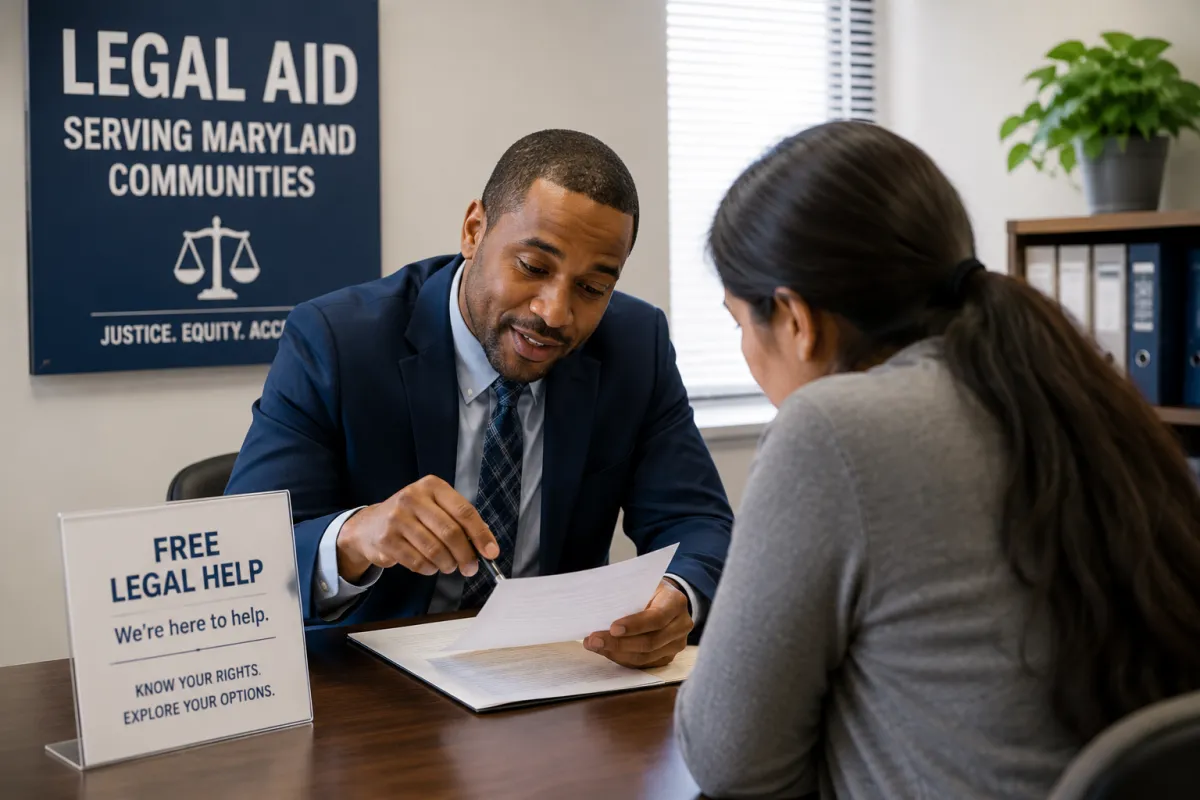
What Are Legal Aid Organizations, and How Can They Help Maryland Homeowners?
If you're behind on your mortgage in Maryland, you may be wondering whether you need legal help—but worry that hiring an attorney is too expensive.
Many homeowners don't realize that nonprofit legal aid organizations may be able to provide free or low-cost legal assistance if they qualify.
Whether you're facing foreclosure, trying to understand legal notices, or simply looking for reliable information, legal aid organizations may be able to help you better understand your rights and available options.
This guide explains how legal aid organizations work, who may qualify, and how they may assist Maryland homeowners with foreclosure-related legal questions.
What Is a Legal Aid Organization
A legal aid organization is a nonprofit group that provides free or low-cost legal services to eligible individuals and families.
Unlike a private law firm, legal aid organizations are designed to help people who may not be able to afford an attorney.
Each organization has its own eligibility requirements, which often depend on:
Household income
Family size
The type of legal issue
Where you live
Not everyone will qualify for assistance, but many organizations encourage Maryland homeowners to contact them if they're unsure about their eligibility.
Why Legal Aid Can Be Helpful During Foreclosure
Foreclosure is a legal process.
That means homeowners may receive court documents, legal notices, deadlines, and other paperwork that can be difficult to understand without guidance.
For many Maryland homeowners, simply understanding what these documents mean can help reduce confusion and make conversations with other professionals more productive.
While legal aid organizations cannot guarantee a particular outcome, they may be able to explain legal documents, discuss homeowner rights, and help eligible individuals better understand Maryland's foreclosure process.
How Can Legal Aid Organizations Help Homeowners
Depending on the organization and your individual circumstances, legal aid organizations may be able to assist with:
Explaining foreclosure-related documents
Reviewing court notices and legal filings
Answering questions about homeowner rights under Maryland law
Explaining parts of Maryland's foreclosure process
Providing information about housing laws
Assisting with probate or property ownership issues
Helping resolve certain consumer law matters
Identifying potential foreclosure scams
Referring homeowners to other community resources when appropriate
The services available vary from one organization to another, so it's always a good idea to ask what assistance they provide.
Who May Qualify for Legal Aid
Legal aid organizations generally have eligibility guidelines.
These may include:
Household income
Family size
Where you live
The type of legal issue involved
Eligibility requirements differ among organizations.
Even if you aren't sure whether you qualify, it's often worthwhile to contact the organization directly.
If they aren't able to assist, they may be able to refer you to another nonprofit, attorney referral service, or community organization.
What Legal Aid Organizations Cannot Do
Legal aid organizations provide valuable services, but it's also important to understand their limitations.
Depending on the organization, they may not be able to:
Accept every case
Represent every homeowner
Guarantee a particular outcome
Provide assistance if eligibility requirements aren't met
Handle legal matters outside their practice areas
Because nonprofit organizations often have limited staff and resources, assistance is typically prioritized based on eligibility and the nature of the legal issue.
What Should You Have Ready Before Contacting a Legal Aid Organization
Preparing ahead of time can make your first conversation more productive.
Helpful information may include:
Your most recent mortgage statement
Letters from your mortgage servicer
Court documents, if a foreclosure case has already been filed
Proof of household income
Recent financial information
Your mortgage loan number
Important deadlines you've received
A written list of questions you'd like to ask
You don't need every document perfectly organized.
Simply gathering the information you have available can help the conversation go more smoothly.
What Happens After You Contact a Legal Aid Organization
Every legal aid organization has its own intake process, but many follow similar steps.
Some organizations conduct an initial phone interview, while others may ask homeowners to complete an online application or schedule an appointment.
During the intake process, you may be asked about:
Your financial situation
Your legal issue
Household income
Your housing situation
Important court or foreclosure deadlines
After reviewing your information, the organization will determine whether you're eligible for assistance.
If you qualify, they'll explain the next steps.
If you don't qualify, they may recommend another resource that better fits your situation.
Reaching out doesn't obligate you to do anything.
It's simply an opportunity to learn more about the help that may be available.
Community Legal Resources for Maryland Homeowners
Several nonprofit organizations provide legal assistance or legal information to eligible Maryland homeowners.
Community Legal Services of Prince George's County
Community Legal Services of Prince George's County provides civil legal assistance to eligible residents of Prince George's County, including help with certain housing-related legal matters.
Maryland Legal Aid
Maryland Legal Aid serves communities throughout the state and provides legal assistance in several practice areas, including housing and foreclosure-related issues for eligible individuals.
Maryland Volunteer Lawyers Service
Maryland Volunteer Lawyers Service connects eligible Maryland residents with volunteer attorneys who may provide legal assistance in qualifying civil matters.
Each organization has its own eligibility guidelines, service areas, and available resources, so contacting them directly is the best way to learn what assistance may be available.
Other Helpful Resources for Maryland Homeowners
Legal aid organizations are only one part of the support network available to homeowners.
Depending on your situation, you may also benefit from speaking with:
A HUD-approved housing counselor
Your mortgage servicer
The Maryland Department of Housing and Community Development
A nonprofit housing organization
The Consumer Financial Protection Bureau (CFPB)
A private attorney, if appropriate
Each resource serves a different purpose.
Learning which resource best fits your situation can help you make more informed decisions.
Common Misconceptions About Legal Aid
Many homeowners aren't familiar with how legal aid organizations work.
Here are a few common misconceptions.
Myth: Legal aid only helps people who are already in court.
Not necessarily.
Some organizations assist homeowners before a foreclosure case has even been filed.
Myth: Legal aid only handles lawsuits.
No.
Many organizations also answer legal questions, explain documents, and provide information about housing rights.
Myth: I have to pay upfront.
Many nonprofit legal aid organizations provide free services to homeowners who meet their eligibility requirements.
Myth: Legal aid can help every homeowner.
Because legal aid organizations have limited resources, they cannot accept every case or guarantee representation.
Asking Questions Is a Positive First Step
Many Maryland homeowners hesitate to contact a legal aid organization because they aren't sure whether they'll qualify or they worry they'll be expected to make immediate decisions.
Fortunately, that's usually not how the process works.
Reaching out is simply an opportunity to gather information.
Whether you're in Prince George's County or another part of Maryland, learning about available legal resources can help you better understand your rights and ask more informed questions.
Education doesn't replace legal advice, but it can reduce uncertainty and help you make more confident decisions.
Frequently Asked Questions
What is a legal aid organization?
A legal aid organization is a nonprofit that provides free or low-cost legal services to eligible individuals and families.
Is legal aid free?
Many legal aid organizations provide free services to eligible applicants, while others may offer low-cost assistance depending on the circumstances.
Who qualifies for legal aid in Maryland?
Eligibility varies by organization and often depends on income, household size, where you live, and the type of legal issue involved.
Can legal aid help with foreclosure questions?
Some legal aid organizations assist eligible homeowners with foreclosure-related legal issues, although available services vary.
Can legal aid explain Maryland foreclosure notices?
Yes. Depending on the organization, legal aid staff may help explain foreclosure-related documents and legal notices.
Can legal aid represent me in court?
Some organizations may provide legal representation in qualifying cases, while others may offer advice or referrals instead.
Is my conversation with a legal aid organization confidential?
Legal aid organizations generally follow confidentiality rules, but you can always ask about their privacy policies during your initial conversation.
Can I contact legal aid before foreclosure begins?
Yes. Many homeowners seek legal information during the pre-foreclosure stage before a court case has been filed.
What if I don't qualify for legal aid?
If you don't qualify, the organization may recommend another attorney, nonprofit organization, or community resource.
Are legal aid organizations nonprofit?
Yes. Legal aid organizations are generally nonprofit organizations created to provide legal assistance to eligible individuals and families.
Need Help Finding the Right Resources?
If you're a Maryland homeowner who's behind on mortgage payments, knowing where to find reliable legal information can make the foreclosure process feel much less overwhelming.
Whether you're in Prince George's County or elsewhere in Maryland, understanding the resources available to you can help you ask better questions and make more informed decisions.
If you'd like to discuss your situation or learn about resources that may be available, call or text Kareem Aaron at 301-579-7797.
There's no obligation and no pressure—just helpful information to help you better understand your options.
Disclaimer: This article is provided for informational purposes only and should not be considered legal advice. Legal aid organizations have their own eligibility requirements, and every homeowner's situation is unique.