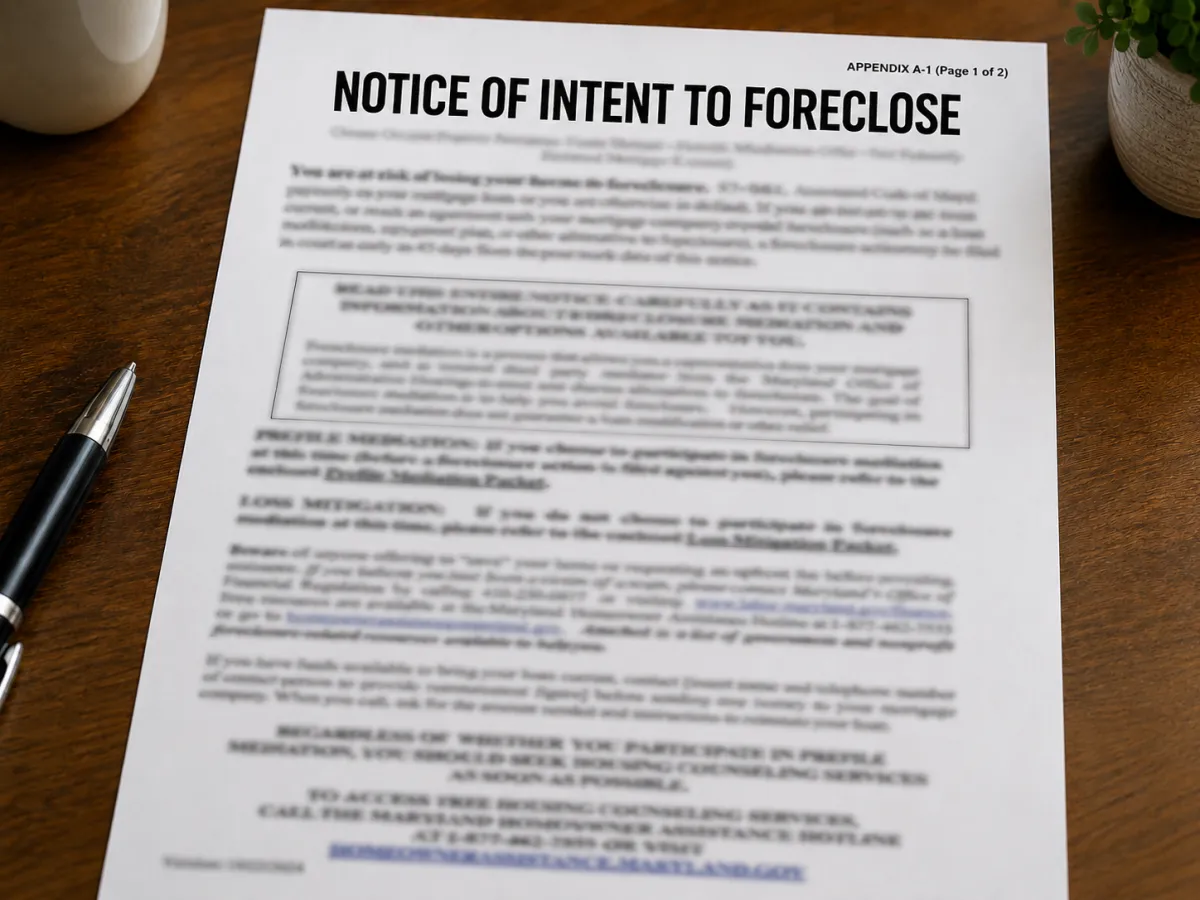
I Got a Notice of Intent to Foreclose in Maryland… What Does This Mean?
Opening the mailbox and seeing a letter titled “Notice of Intent to Foreclose” can feel overwhelming.
For many homeowners in Prince George’s County, this is the first time they have ever seen a document like this. The wording feels serious. The formatting looks legal. And the first reaction is often fear.
If you recently received one of these notices, you are probably wondering:
- “Am I losing my house?”
- “What happens next?”
- “Why did I get this?”
- “Is it too late?”
Those are normal questions.
And the truth is, many Maryland homeowners receive this letter after falling behind on mortgage payments for a period of time.
This article is not legal advice. It’s simply a plain-English explanation of what this notice usually means and why it catches so many people off guard.
---
That Letter Can Feel Scary at First
Most people are not prepared for how intimidating the notice looks.
The title is large.
The language feels formal.
There are pages of information attached.
Sometimes it arrives in certified mail or a large envelope.
Even calm people can panic when they open it.
A lot of homeowners immediately think:
“This is it. I’m losing my home.”
But in many cases, this letter is an early warning notice — not someone showing up at your door tomorrow.
That does not mean it should be ignored. But it also does not mean you need to assume the worst immediately.
---
You’re Probably Not the Only Person Getting One
One thing many homeowners do not realize is how common mortgage hardships can become.
Life changes fast.
Sometimes people fall behind because of:
- Job loss
- Reduced income
- Medical issues
- Divorce or separation
- Rising expenses
- Family emergencies
- Unexpected repairs
- Inflation and higher monthly costs
For some people, it starts with missing one payment and trying to catch up the next month.
Then another difficult month happens.
Before long, the situation starts feeling heavier and more stressful.
Many homeowners in Maryland have gone through periods like this.
---
What This Letter Usually Means in Plain English
In simple terms, the mortgage company is letting you know the loan has fallen seriously behind.
The notice is basically saying:
“Your mortgage is in default, and if the situation is not resolved, legal action could eventually happen later.”
That’s the plain-English version.
In Maryland, lenders generally send this notice before officially filing a foreclosure case in court.
Again, this article is not legal advice, and every situation is different. But for many homeowners, this letter is more of a major warning sign than an immediate ending.
---
Why the Letter Looks So Intimidating
A lot of homeowners freeze after reading the notice because it feels extremely official.
The document often includes:
- Bold legal-style headings
- Dense paragraphs
- References to mediation
- References to loss mitigation
- Deadlines
- Government resources
- Formal mortgage language
Even highly educated people can read it and think:
“I have no idea what I’m looking at.”
That reaction is very common.
Mortgage paperwork is not written like normal everyday conversation. It is written in formal legal and servicing language, which can make the entire situation feel even more stressful.
---
A Few Things Many Homeowners Do After Receiving It
Every situation is different, and this is not legal advice.
But many homeowners start by doing a few simple things:
Opening Every Piece of Mail
One of the biggest stress reactions is avoiding the mailbox completely.
But avoiding the letters usually increases anxiety because uncertainty grows.
Even if the paperwork feels uncomfortable, knowing what you received is often better than guessing.
Gathering Mortgage Information
Some homeowners begin organizing things like:
- Mortgage statements
- Monthly bills
- Income information
- Hardship explanations
- Recent mail from the lender
Sometimes simply getting organized helps the situation feel a little less chaotic.
Asking Questions
A lot of people think they are supposed to suddenly understand legal paperwork overnight.
You are not expected to become a mortgage expert.
Many homeowners simply begin by asking questions and learning what the notice actually means.
Looking Into Available Resources
Some homeowners choose to speak with:
- Their mortgage servicer
- HUD-approved housing counselors
- Maryland attorneys
- Local professionals familiar with distressed property situations
The important thing is understanding that resources may still exist.
---
The Biggest Mistake Is Usually Avoiding the Situation Completely
Fear can cause people to freeze.
That is normal.
Sometimes homeowners avoid:
- Opening mail
- Answering phone calls
- Looking at account balances
- Talking about the problem at all
But usually, avoiding the situation creates even more stress mentally and emotionally.
Information tends to reduce uncertainty.
Even learning the basics of what the notice means can help homeowners feel more grounded and less overwhelmed.
---
You Don’t Have to Figure Everything Out Today
One of the hardest parts of receiving a Notice of Intent to Foreclose is feeling like every answer must happen immediately.
But many homeowners first need a moment to slow down and process what is happening.
You do not need to suddenly become a legal expert overnight.
You do not need to understand every page immediately.
And you do not need to panic just because the document looks intimidating.
Sometimes the first step is simply:
- Reading the notice carefully
- Understanding what it is
- Gathering information
- Asking questions
- Exploring possible options calmly
---
A Local, Pressure-Free Conversation
If you’re in Prince George’s County and recently received a Notice of Intent to Foreclose, sometimes it helps to simply talk things through with someone local who understands how stressful these situations can feel.
If you want a calm, pressure-free conversation about the situation, you can call or text me.
No pressure. No judgment. Just a simple conversation.
---
Disclaimer
This article is for general educational purposes only and is not legal advice. Homeowners with legal questions may want to speak with a qualified Maryland attorney or HUD-approved housing counselor.