An Auction Date Has Been Set for My Home. What Should I Do Next?
Finding out that your home has been scheduled for a foreclosure auction can feel overwhelming.
You may be asking yourself questions like:
Can the auction still be postponed?
Is there anything I should be doing right now?
What happens after the sale?
How do I know the auction date is accurate?
These are common concerns, and you're not alone in asking them.
While every foreclosure case is different, understanding what an auction date means—and what it doesn't mean—can help you make informed decisions during this stage of the foreclosure process.
An auction date is an important milestone, but it isn't necessarily the end of your case. Court filings, notices, and other developments may continue before the scheduled sale. Staying informed and organized can help you better understand where your case stands and reduce unnecessary stress.
Where Does the Auction Date Fit in the Maryland Foreclosure Process
Understanding where the foreclosure auction falls within the overall process can make the situation feel less confusing.
Although every case follows its own timeline, a typical Maryland foreclosure generally includes the following stages:
Mortgage payments become delinquent.
The loan enters default.
The lender appoints Substitute Trustees.
An Order to Docket is filed with the court.
Required foreclosure notices are mailed to the homeowner.
Mediation or loss mitigation opportunities may occur, depending on the circumstances.
A foreclosure auction is scheduled.
The property is offered for sale at a public auction.
The sale is reported to the court.
The court considers ratification of the sale.
Ownership is ultimately transferred after the legal process is completed.
While this provides a general overview, every foreclosure case is unique. Some cases move quickly, while others experience delays, postponements, or additional court proceedings.
What Does an Auction Date Actually Mean
A foreclosure auction date is the day the lender intends to sell the property at a public trustee sale.
By the time an auction is scheduled, the foreclosure process has usually been underway for several months. However, receiving a sale date doesn't necessarily answer every question about your case.
One of the most common questions homeowners ask is whether everything is already final. In reality, new court filings, updated notices, and schedule changes can still occur before the auction takes place.
Some common questions homeowners have include:
Has anything changed since the last court filing?
Has the foreclosure sale been postponed?
Are there any new notices I should review?
Has the court entered additional orders?
What happens after the auction?
These are all reasonable questions, and continuing to monitor your case can help you stay informed as new developments occur.
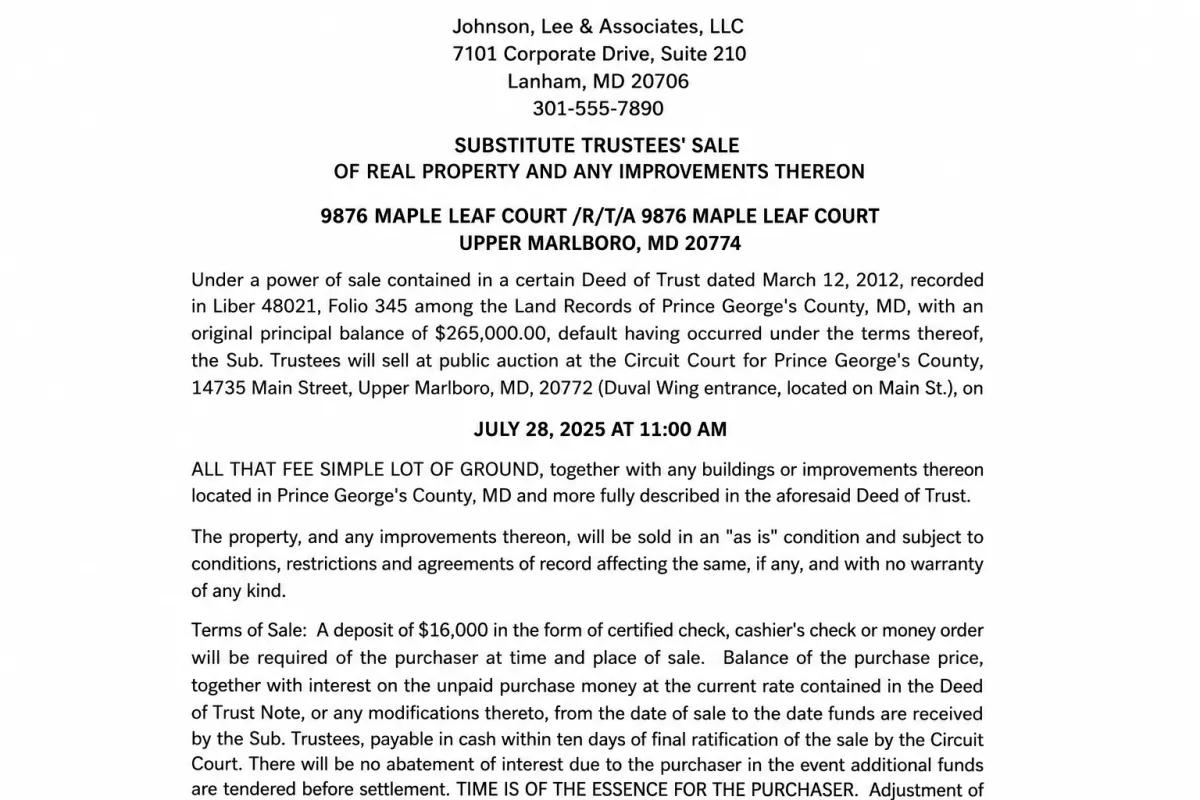
Verify the Information Online
The notice you receive in the mail is only one source of information.
You should also monitor your foreclosure case through Maryland Judiciary Case Search and review published foreclosure sale notices to verify that the information matches the documents you've received.
As you review your case, look for updates such as:
Newly filed court documents
Updated docket entries
Changes to the scheduled auction date
Court orders
Notices filed by the Substitute Trustees
Reports filed after the sale
Ratification proceedings
Any indication that the auction has been postponed
Comparing your mailed notices with the official court record can give you a more complete understanding of your case and help you identify any recent developments.
Don't Ignore the Auction Notice
Once you receive notice that an auction has been scheduled, take time to read every page carefully.
Many homeowners glance at the first page and set the paperwork aside. However, the documents often contain important information you'll want to reference later.
Review the notice for details such as:
Property address
Scheduled auction date
Scheduled auction time
Auction location
Contact information for the foreclosure attorney
Additional notices included in the mailing
Even if you've already reviewed the documents once, read through them again. Small details can become important later in the foreclosure process.
It's also helpful to keep every notice together in one folder so they're easy to locate if questions arise later.
Understand What Happens Between Now and the Auction
Many homeowners assume that once the auction is scheduled, nothing else happens until the sale date.
In reality, your foreclosure case may continue to evolve.
Depending on your situation, you could receive:
New court filings
Updated correspondence from your mortgage servicer
Additional notices from the foreclosure attorney
Court orders
Changes to the auction schedule
Postponement notices
Continuing to monitor your case can help you stay informed rather than relying on assumptions.
Can a Foreclosure Auction Be Postponed
Yes.
Foreclosure auctions are sometimes postponed or rescheduled.
A postponement can occur for a variety of reasons, and every foreclosure case is different.
Because postponements do happen, homeowners should avoid assuming the scheduled auction will always occur on the original date.
Instead, continue checking official records and carefully reviewing any notices you receive.
If the sale date changes, staying informed can help you avoid confusion.
Common Mistakes Homeowners Make After Receiving an Auction Notice
Receiving an auction notice can be stressful, but avoiding these common mistakes may help you stay better informed throughout the process.
Some of the most common mistakes include:
Ignoring future mail from the court or mortgage servicer.
Assuming the auction date can never change.
Throwing away foreclosure-related paperwork.
Depending on rumors or advice from friends instead of official sources.
Waiting until the last minute to organize important documents.
Failing to monitor court filings for updates.
Remaining organized and informed can make it easier to understand what's happening as your case progresses.
What You Should Avoid
During this stage of the foreclosure process, there are a few habits that can create unnecessary confusion.
Try to avoid:
Ignoring new correspondence.
Assuming your case will follow someone else's experience.
Throwing away notices or court documents.
Missing updates in the court record.
Waiting until after the auction to organize your paperwork.
Instead, continue gathering information so you understand where your case stands.
Stay Organized During This Stage
Keeping your foreclosure information organized is one of the most practical things you can do.
Having everything in one place makes it easier to understand your case and prepare for conversations with professionals.
Consider keeping:
Court notices
Letters from your mortgage servicer
Correspondence from the foreclosure attorney
Notes from phone conversations
Copies of important documents
A list of important dates
Many homeowners also find it helpful to write the date they receive every letter or notice.
Over time, this creates a timeline that makes the foreclosure process much easier to follow.
Don't Assume You Know What Will Happen
Every foreclosure case is different.
Even if you know someone who has gone through foreclosure, your experience may not be the same.
Some cases move quickly.
Others experience delays, additional court filings, or postponed sales.
Rather than relying on assumptions, continue reviewing official notices and monitoring your case.
The more informed you are, the easier it becomes to understand what is happening and prepare for the next stage.
Use This Time to Gather Information
An auction date marks an important point in the foreclosure process, but it can also be an opportunity to become better informed.
Ask yourself questions such as:
Do I understand what stage my case is in?
Have I reviewed my most recent court filings?
Have I read every notice I've received?
Do I have copies of all my important documents?
Am I monitoring my case for updates?
Gathering accurate information now can make future decisions easier.
Key Takeaways
An auction date is an important milestone in the foreclosure process.
Receiving an auction date does not necessarily mean every aspect of your case is final.
Continue reviewing every notice you receive.
Monitor court filings for updates and possible postponements.
Keep your foreclosure documents organized.
Every foreclosure case follows its own timeline.
Stay informed by relying on official information rather than assumptions.
Frequently Asked Questions
Does an auction date mean I'll lose my home?
An auction date means the foreclosure sale has been scheduled. Every foreclosure case is different, and homeowners should continue monitoring their situation for updates.
Can a foreclosure auction be postponed in Maryland?
Yes. Some foreclosure auctions are postponed or rescheduled, making it important to continue reviewing court records and official notices.
How do I know if my auction date has changed?
You can monitor Maryland Judiciary Case Search, review published foreclosure sale notices, and carefully read any new correspondence you receive.
Where can I verify my foreclosure sale date?
Your foreclosure sale date may appear in court records, official sale notices, and documents mailed by the foreclosure attorney.
Can I attend my own foreclosure auction?
In many cases, foreclosure auctions are public events. If you're considering attending, you may want to familiarize yourself with the auction procedures in advance.
Is the foreclosure auction open to the public?
Generally, yes. Foreclosure auctions are often open to members of the public, including investors and other interested buyers.
What happens if nobody buys my home?
If no third-party buyer purchases the property at the foreclosure auction, ownership may eventually transfer to the lender, and the property may become Real Estate Owned (REO).
What is ratification?
After a foreclosure sale, the court typically reviews the sale before it becomes final. This step is commonly referred to as ratification.
Should I continue checking court records after the auction?
Yes. Additional filings often occur after the auction, including reports of sale and documents related to the court's review of the foreclosure sale.
What paperwork should I keep?
Save all court notices, mortgage servicer correspondence, foreclosure attorney letters, and any documents related to your foreclosure case.
Need Help Understanding Where Your Case Stands?
Every foreclosure case is different, and receiving an auction notice often raises new questions.
If your home in Prince George's County has been scheduled for foreclosure, understanding where your case stands today can help you make informed decisions moving forward.
Kareem Aaron works with homeowners throughout Prince George's County and can help you understand the publicly available information related to your foreclosure, explain where your case appears to be in the process, and answer general questions about what to expect.
Call or text 301-579-7797 to schedule a conversation.
There is no obligation—just an opportunity to better understand your situation.